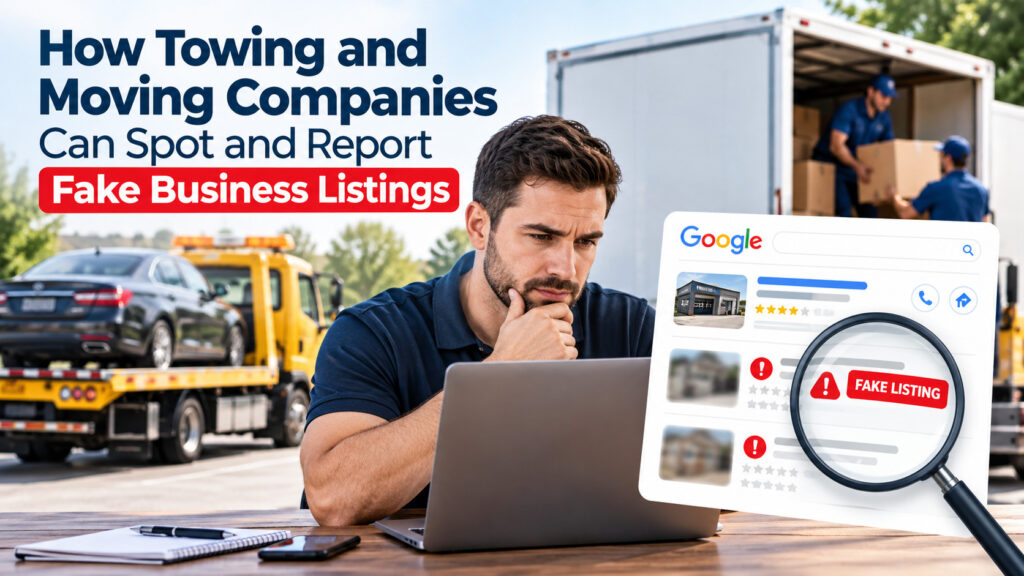
How Towing and Moving Companies Can Spot and Report Fake Business Listings
October 27, 2026
A towing company owner in Phoenix searches for towing near his yard and finds a dozen map listings he has never heard of. Several use names like “Best Towing Phoenix 24/7,” show addresses that turn out to be empty lots, and route to the same call center. Real local companies get pushed down the list.
Some service industries, including towing, locksmiths, and moving, have long struggled with fake listings. Business owners can report them, and doing it carefully helps both customers and honest competitors.
How to Recognize a Fake Listing
Common warning signs include business names stuffed with keywords and city names, addresses at residential homes or vacant lots, many listings sharing one phone number, and stock photos with no real trucks or staff. Reviews that all appeared within a few days, with similar wording, are another clue.
Check before you report. Look up the address on street view, search the phone number, and see whether the business has a real website with a physical location. Some legitimate companies operate as service-area businesses and hide their address, which is allowed.
Report Through the Right Channels
For Google, you can suggest an edit on the listing in Google Maps, such as marking a place as nonexistent or correcting a stuffed name. For more serious cases, Google offers a Business Redressal Complaint Form where you can submit evidence about multiple fake listings at once.
Keep your reports factual. Include screenshots, the listing URLs, and the evidence you found, such as street view images of an empty lot. Avoid reporting competitors simply because they outrank you, since unfounded reports waste time and will not succeed.
Protect and Strengthen Your Own Listing
While reports are reviewed, make sure your own profile follows the rules. Use your real business name, accurate hours, and a verified address or service area. Add photos of your actual trucks and team, and ask customers for honest reviews after each job.
Customers wary of scams often look for confirmation in more than one place. Listing your company in the Transportation Services category on Recommendit gives them another source to verify your name, phone, and service area. Keep your Recommendit details identical to your Google profile so customers can tell which business is real.
Report Carefully, Compete Honestly
Fake listings hurt customers and honest companies alike. Learn the warning signs, verify before reporting, use Google’s edit tools or the Business Redressal form with clear evidence, and keep your own listings accurate. Consistent details on Google, your website, and directories like Recommendit help customers find the real business.
Frequently asked questions
Yes. Platforms allow anyone to suggest edits or report listings that appear fake or violate guidelines. Keep reports truthful and based on evidence. Filing false reports to harm a legitimate competitor could create legal and reputational problems for your business.
Timing varies. Simple edits may be reviewed within days, while complex reports through the Business Redressal form can take longer. Not every report succeeds. Keep records of what you submitted, and follow up with additional evidence if the listings remain.
Make sure your profile follows Google's guidelines and that your business information is accurate and verifiable. If your profile is suspended, you can submit an appeal with supporting documents, such as a business license, utility bill, or photos of your signage and vehicles.
These industries often involve urgent, high-value calls, which makes them attractive to lead-generation operations that create fake local listings and resell the calls. Customers searching in a hurry may not check details carefully. Reporting fake listings helps protect those customers.